The FoodShed: A Multipurpose On-Farm Kitchen and Learning Space
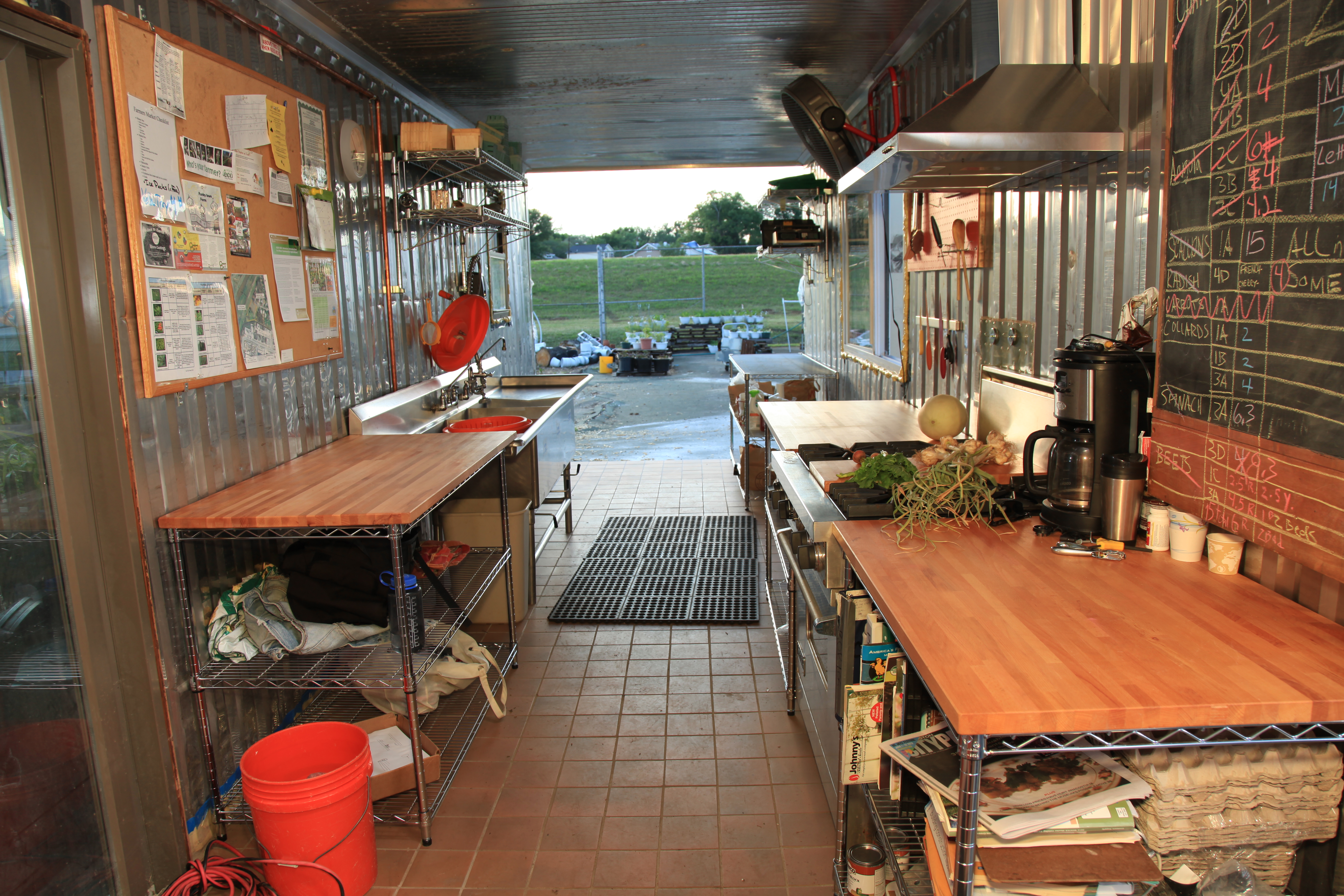
Our Edmonston Farm has an on farm kitchen that was built from a shipping container to serve as a space for washing, processing, storing and refrigeration of food produced on the farm. It is also serves as an educational and teaching space, and uses renewable energy technologies and maximize use of low-tech solutions and recycled materials.
The project demonstrates low cost solution for urban farmers, enable value-added and farm-to-school food entrepreneurial ventures for local urban and small farmers throughout the region. Turning shipping containers into low-cost urban farm infrastructure addresses issues in the profitability of growing food in and around cities and small rural farms. Urban farmers need to get the highest returns for their product, and the ability to properly process, add value to, and appropriately refrigerate or store their product can mean the difference between a failing food enterprise and a successful one.
This project was made possible by a grant from the Southern Maryland Agricultural Development Commission and is in collaboration with the Yestermorrow Design/Build School and the Catholic University School of Architecture.