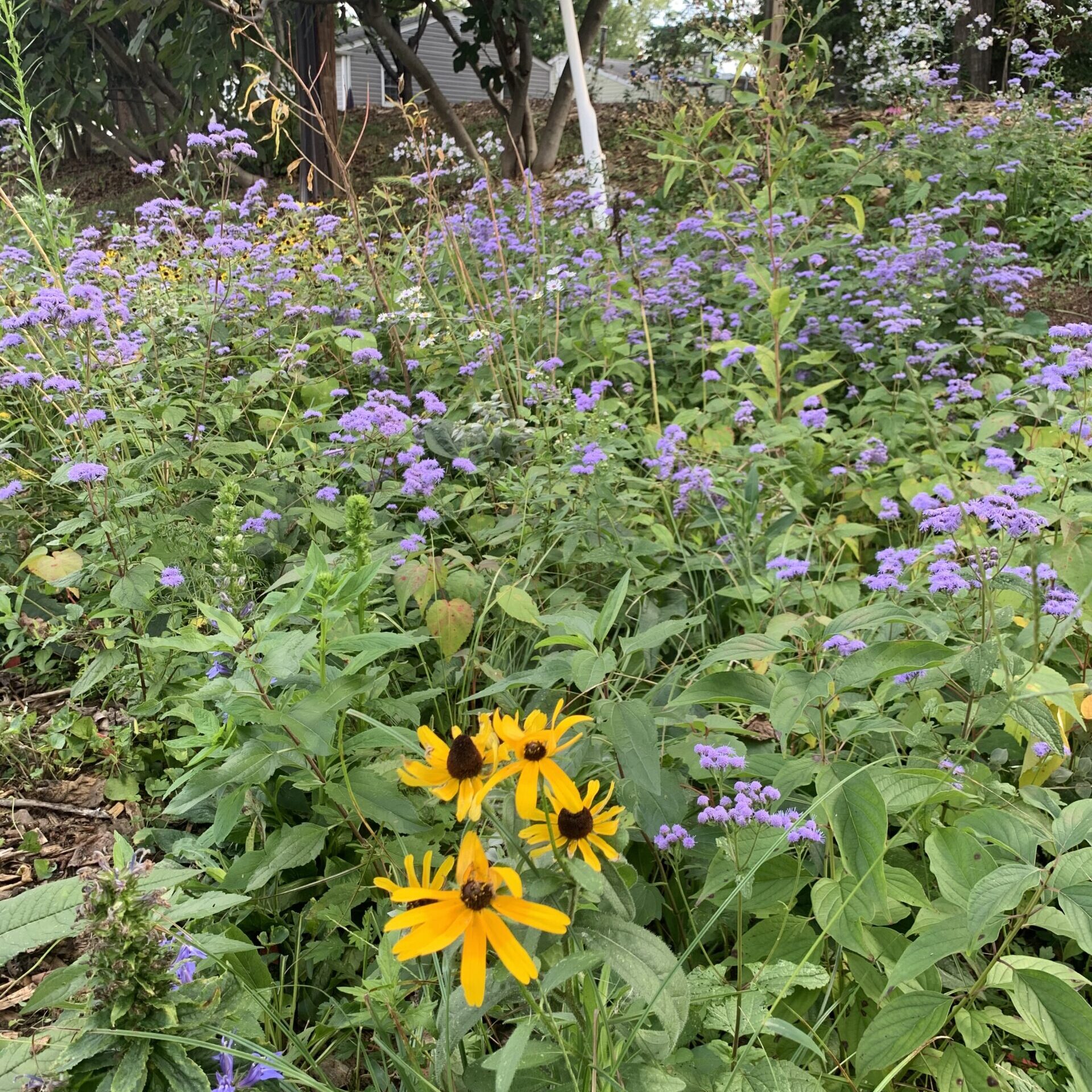
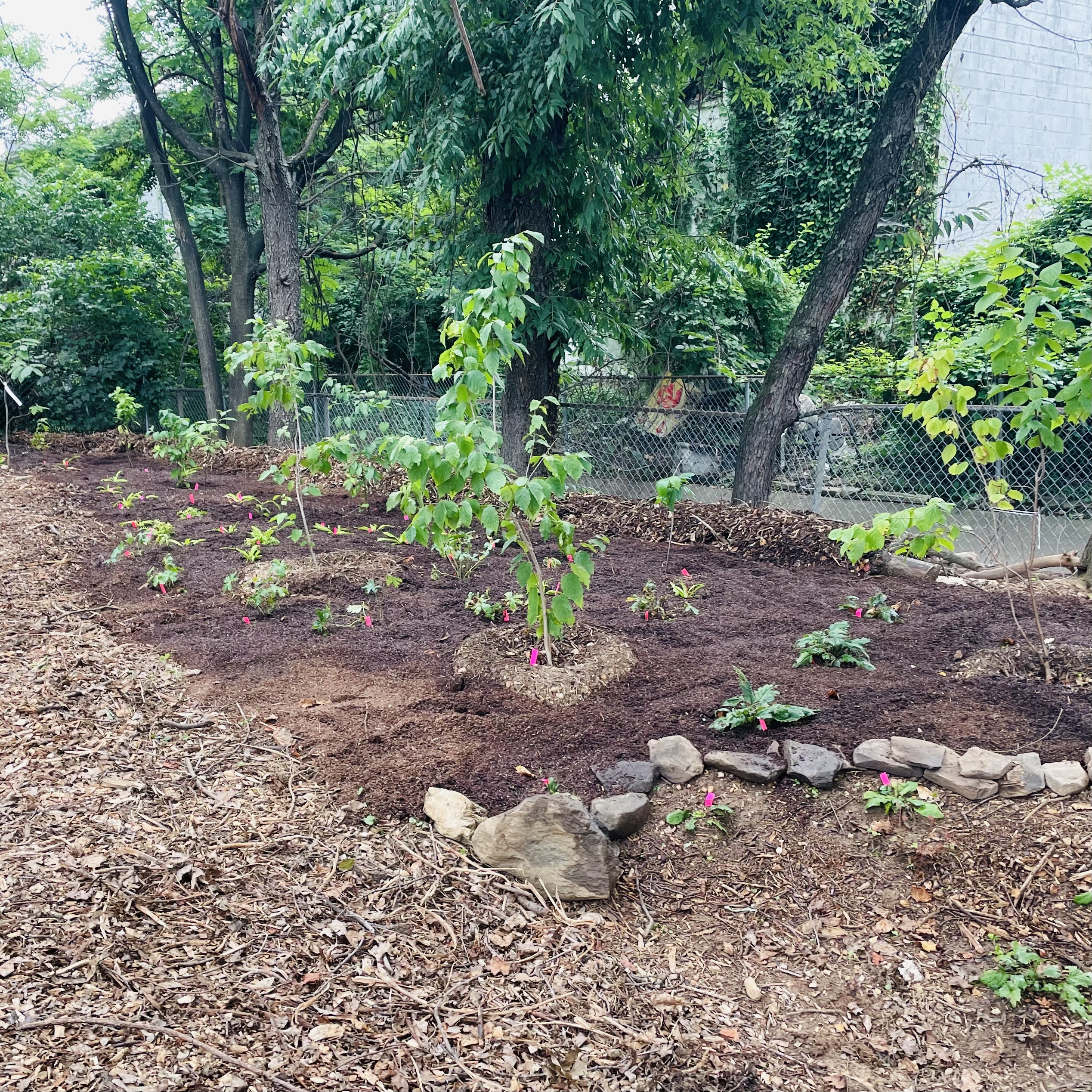
The purpose of this food forest is to mimic the natural ecosystem by planting native species in layers – working with, rather than against, nature itself. It replicates the accumulated knowledge of traditional land stewardship processes and relationships. We acknowledge and honor those indigenous to this land, including the Piscataway and Nacotchtank peoples, and seek to heal from the centuries of exploitation and violence that this country was founded upon.
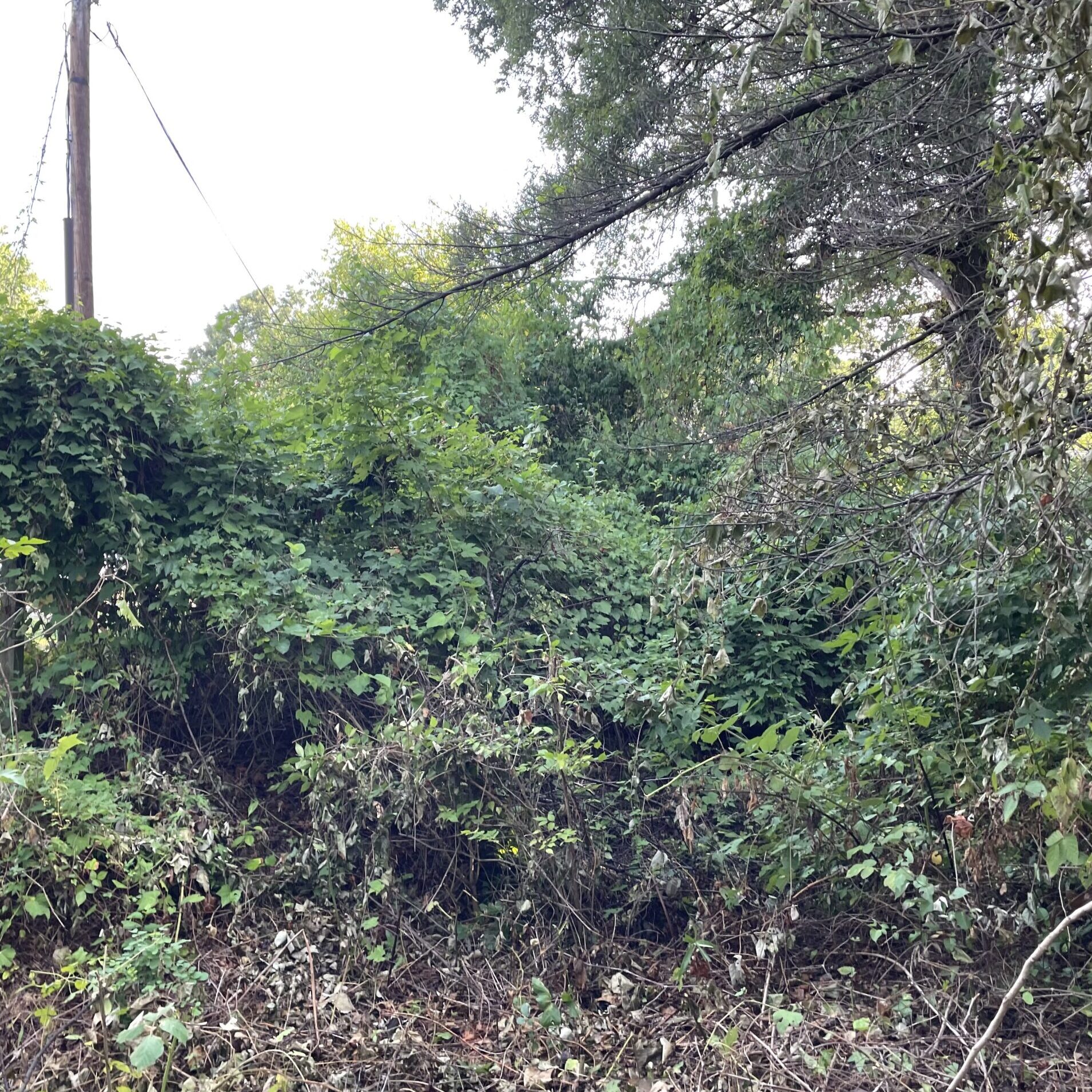
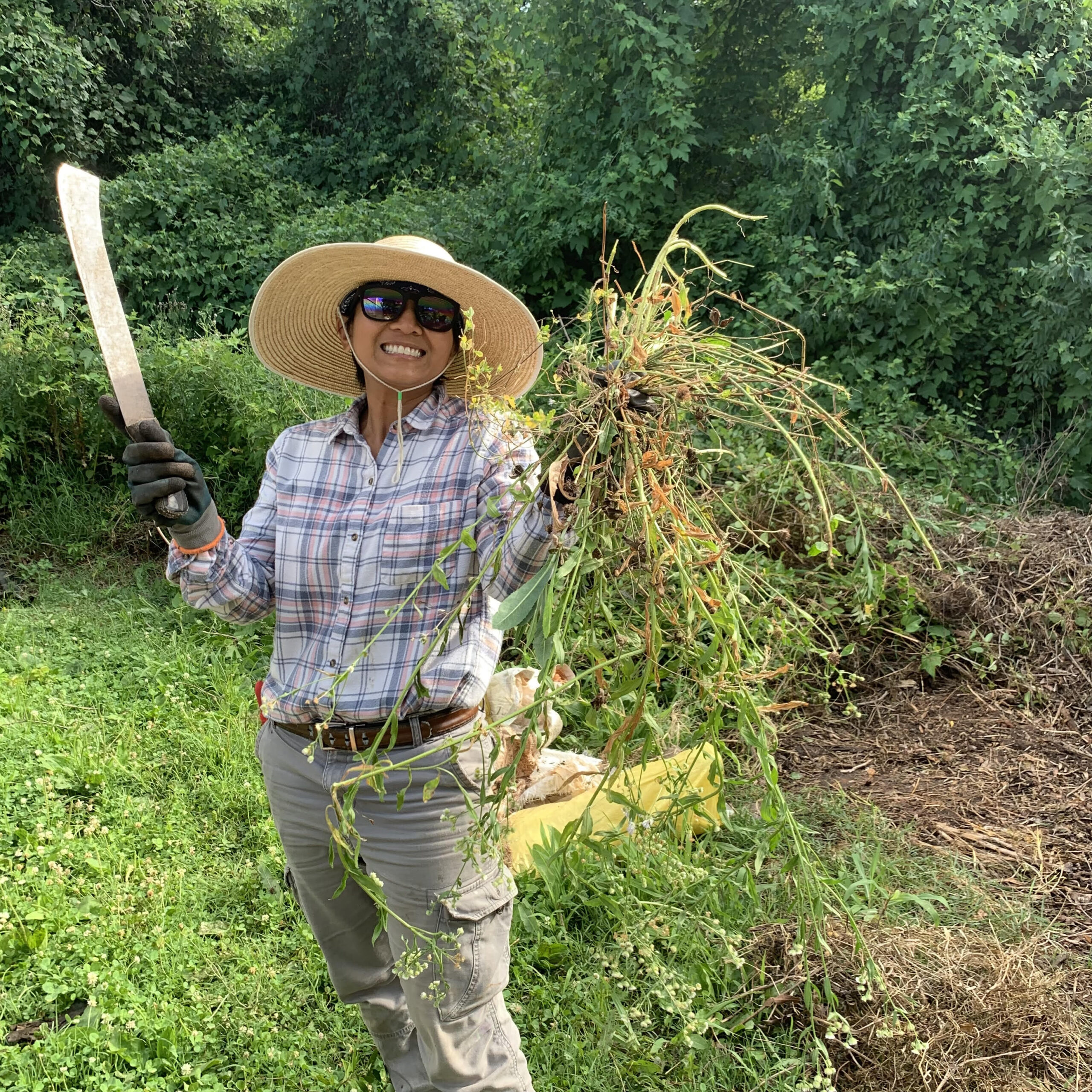
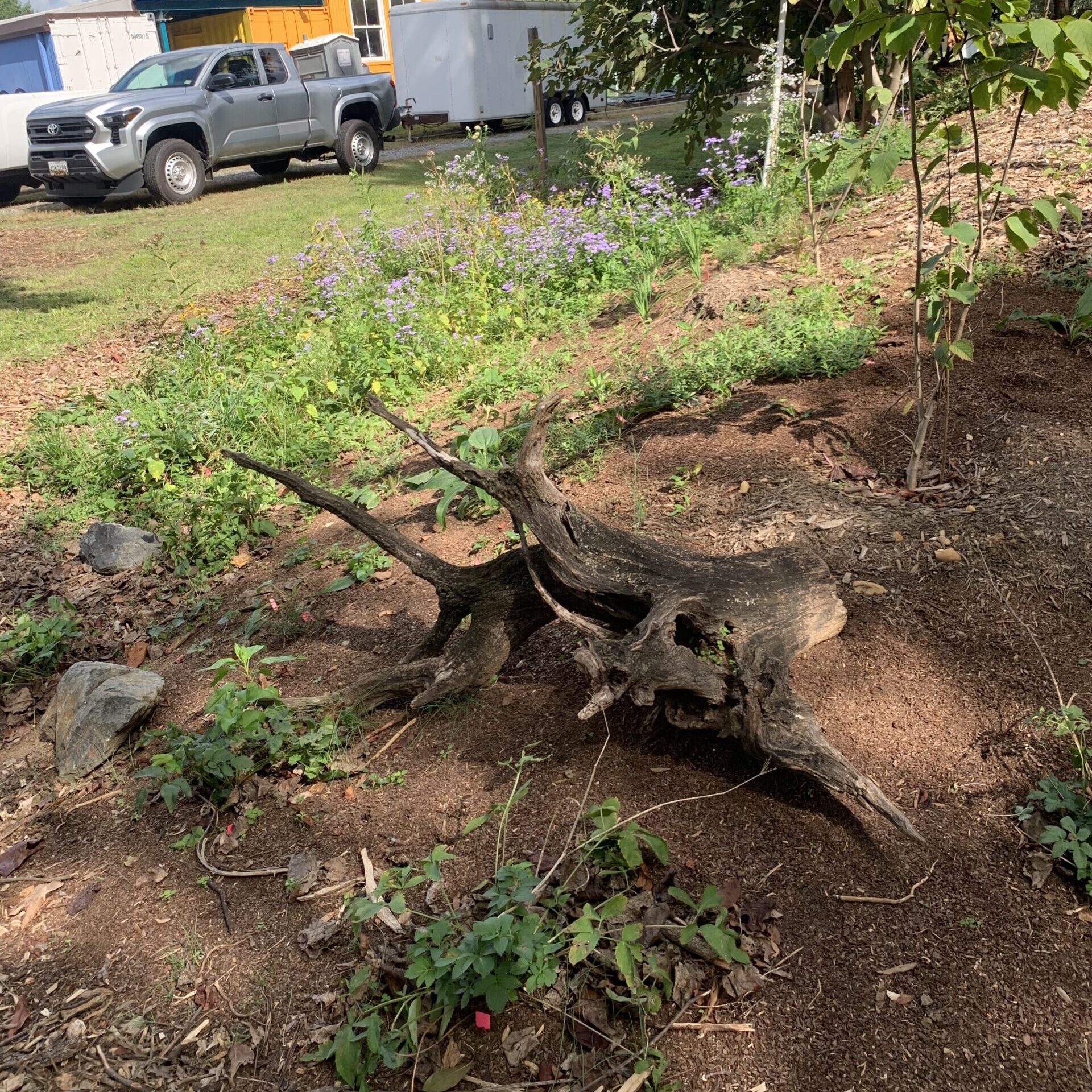
For years this area was underused and overrun with invasive species. In 2024, Community Native Planting Project and ECO City Farms decided to collaborate to transform this space into an educational native food forest and pollinator garden. As organizations focused on food production and ecological stewardship, a native food forest fell at the perfect intersection of our two missions.
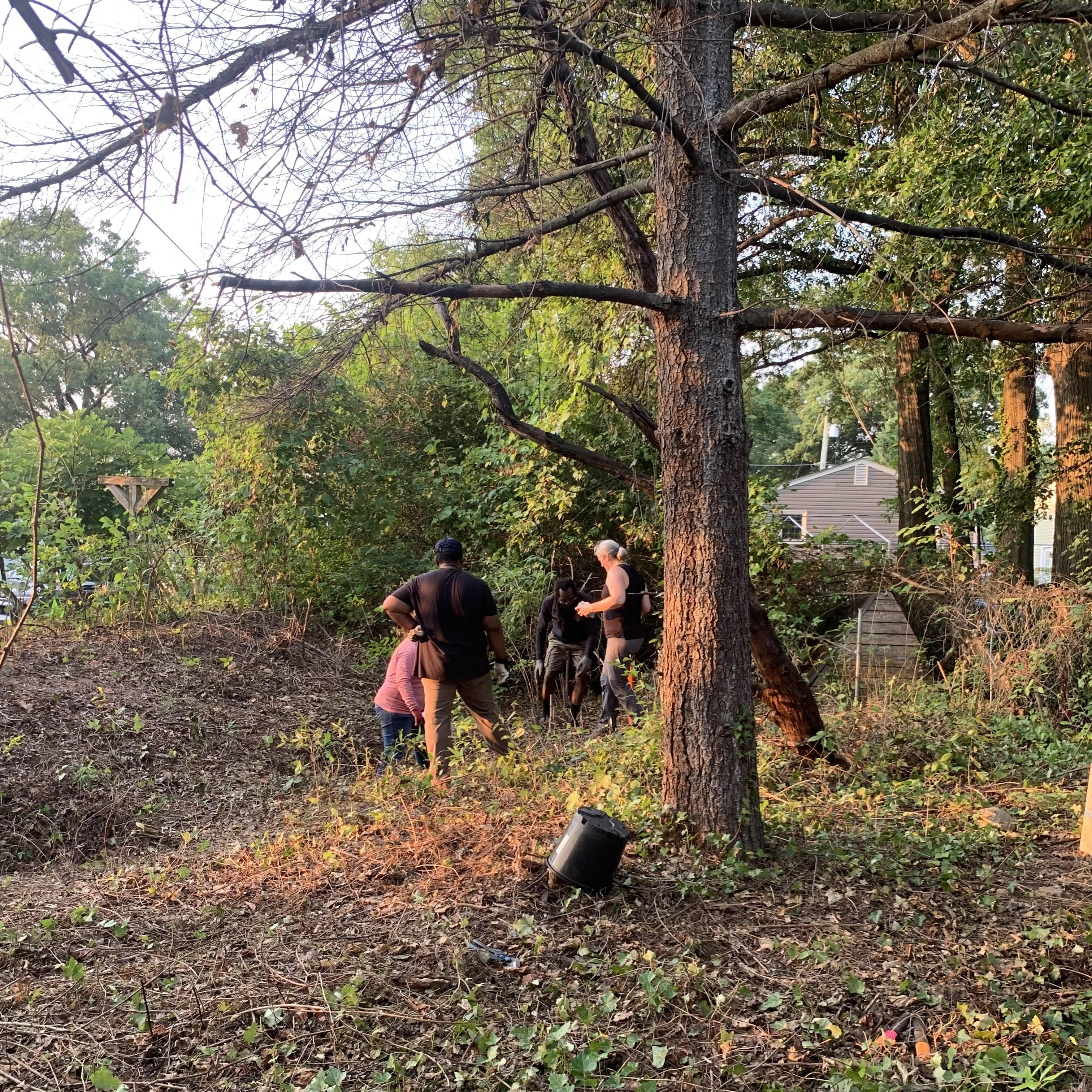
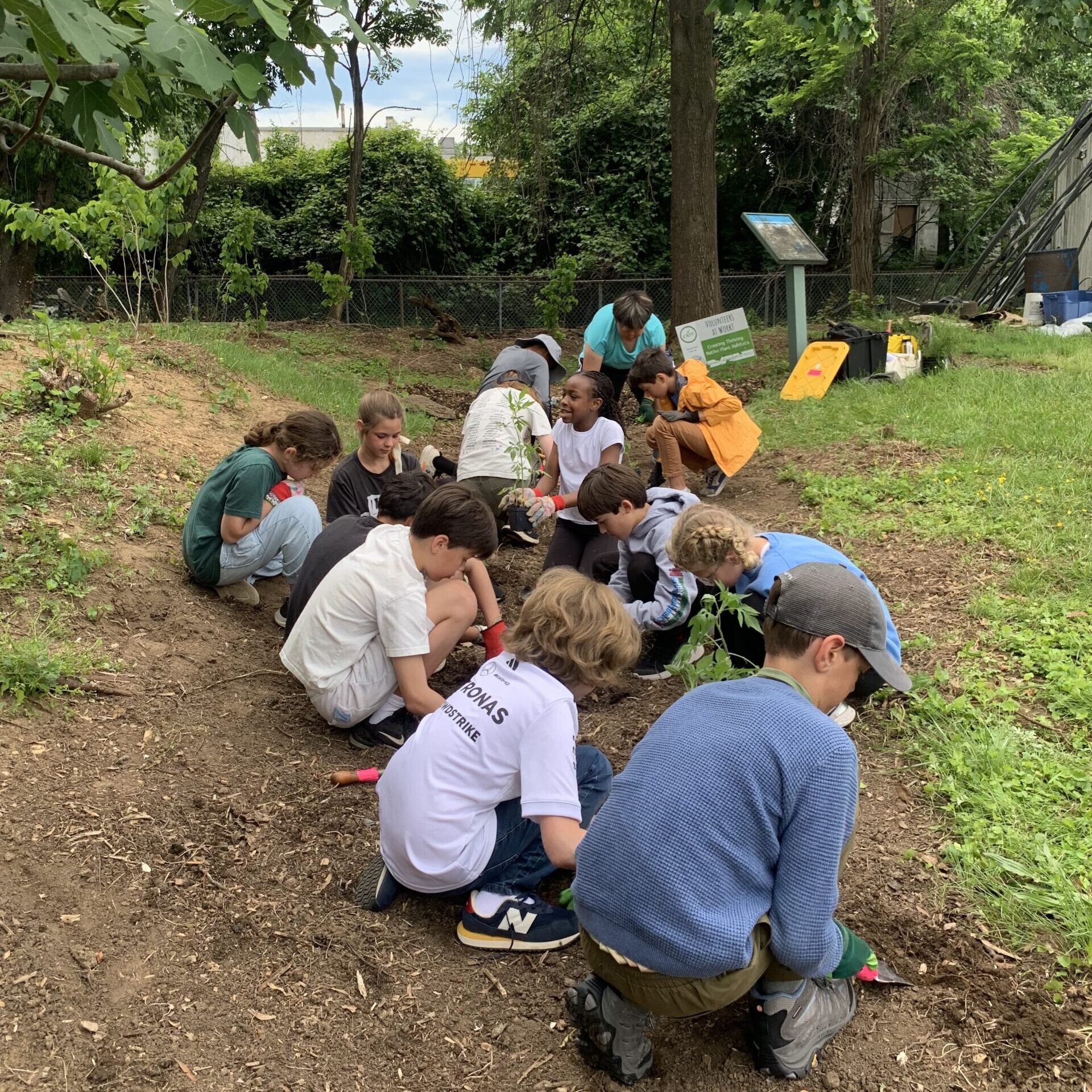
Hundreds of hours of volunteer labor went into invasive removal and native plantings. UMD Landscape Architecture student Eve Josar created the project design for her master’s thesis, focused on making almost everything edible, from groundcover to canopy. Her design was the basis for our work.
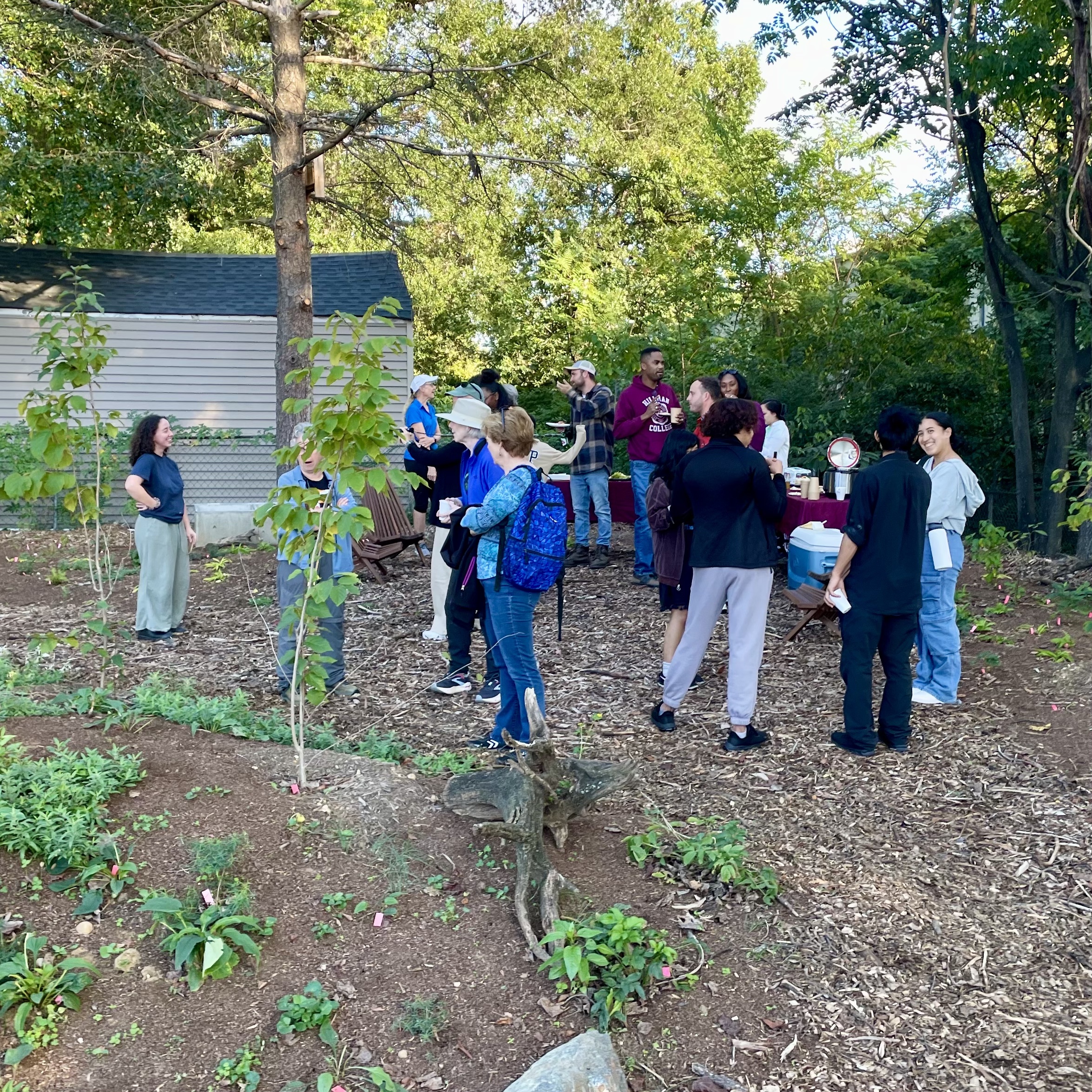
The installation of the food forest was completed in September 2025. The project was funded by the Chesapeake Bay Trust, Maryland Department of Transportation, Maryland Environmental Trust, and Maryland Department of Agriculture.
Special thanks to: Community Native Planting Project, Eve Josar, Joe’s GreenWorks, the Cheverly Garden Club, the Bee Conservancy, Capital Plaza Starbucks staff, Capital Hill Day School and Bishop McNamara High School students, and ECO’s Summer Youth Program for their contributions.
CANOPY
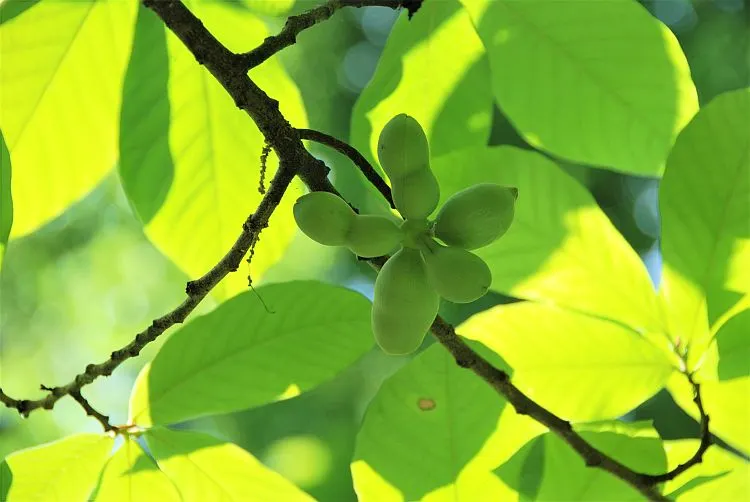
Paw paw tree, Asimina triloba
Paw paw trees produce a sweet, green-to-brown fruit. The flavor is similar to banana, mango, and pineapple. They are commonly consumed raw, but can also be made into jams, ice creams, puddings, or pies. Paw paws typically grow in groves.
Indigenous peoples use the leaves and stems of the paw paw tree for medicine, and the inner bark for rope, string, and lacing (Indigenous Peoples’ Perspective Project).
The Shawnee name for paw paw is ha’siminikiisfwa, which translates to pawpaw month – September – when the fruit ripens (Allegheny Front). Paw paw fruit is brown when ripe.
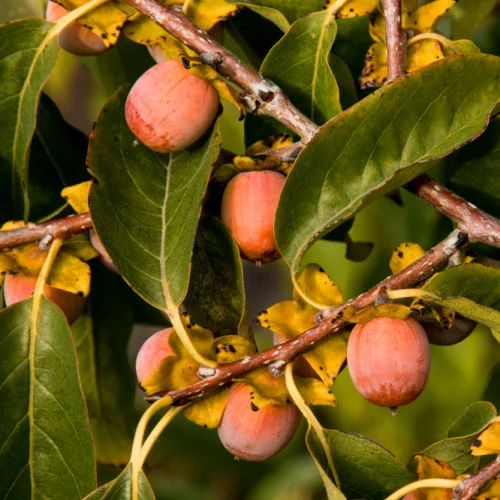
Persimmon trees produce a sweet, edible orange fruit that matures late in the fall. Persimmons are extremely astringent (dry and distasteful) when not ripe. After ripening, the fruit is easy to remove from the tree and extremely soft to the touch.
Persimmon trees are dioecious, meaning that both a male and female tree must be planted near each other in order for the fruit to be pollinated.
Persimmon trees have a variety of traditional medical uses developed by Indigenous peoples. They have been used to treat sore throats, indigestion, heartburn, and venereal diseases (Indigenous Peoples’ Perspective Project).
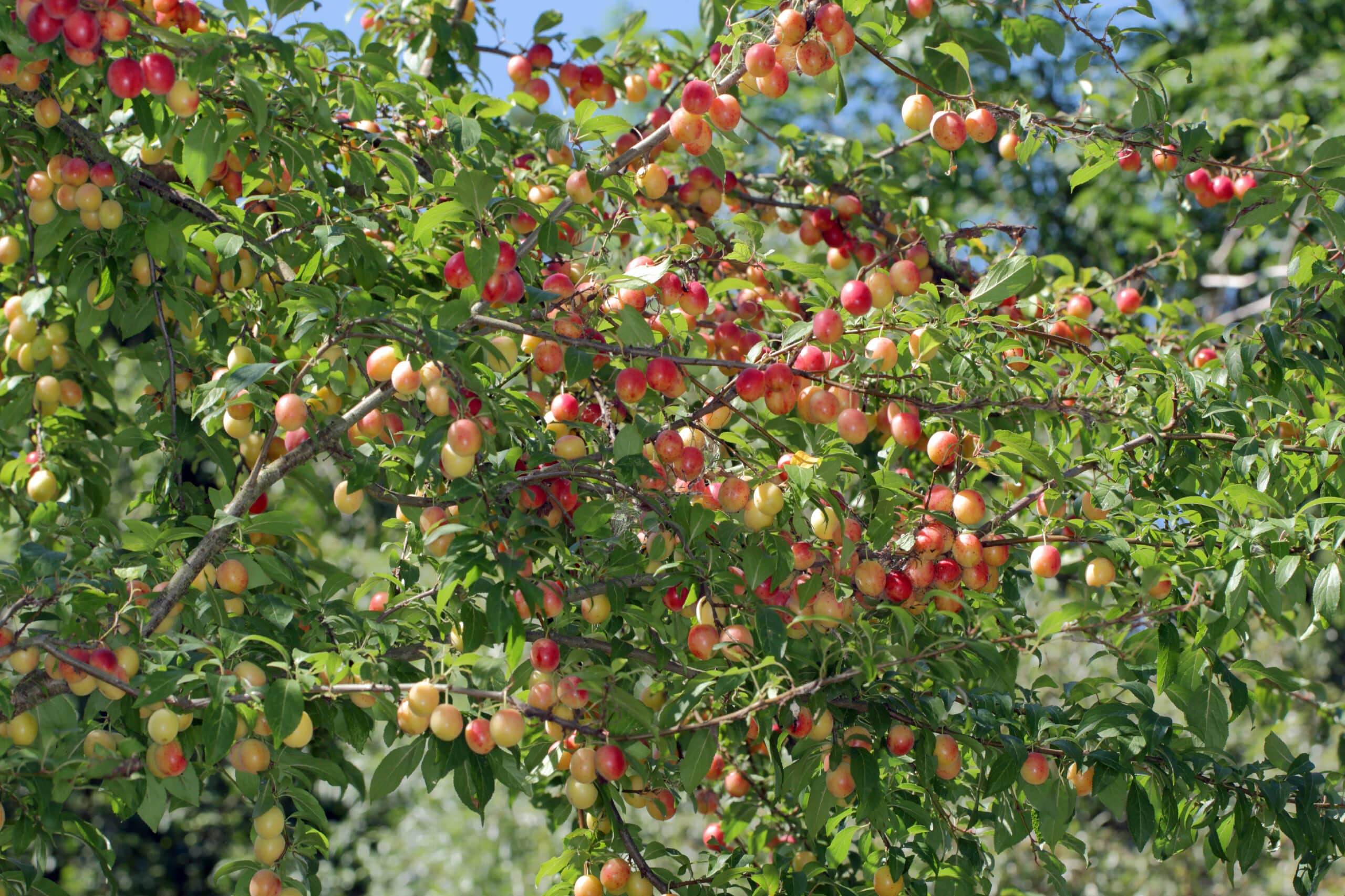
The Chickasaw plum is a North American plum-bearing tree. They get their name from the Chickasaw Nation, who, along with other indigenous peoples, have cultivated the species for centuries. Tree bark on the Chickasaw plum is nearly black and scaly in nature. They grow small, white flowers in the spring and cherry-like plums that ripen in late summer. They are more tart before ripeness.
The fruits of the Chickasaw plum change from yellow to red when fully ripe. Chickasaw plums are delicious when eaten ripe or dried. They can also be used for making jams, syrups, or in wine.